Friday, March 23, 2012

MASHIKO YAKI (益子焼き)-Ceramics of Tochigi Prefecture


Interesting links:
http://www.puckergallery.com/pdf/Hamada%203G%202011.pdf
http://www.studio-pots.com/MM1%20ONLINE%20CATALOGUE.PDF


SHIMAOKA TATSUZO (島岡達三) 1919-2007
Living National Treasure (LNT Ningen Kokuho 1996) Mashiko, for his cord-marked ceramics with slip inlay. He apprenticed with Shoji Hamada. 

These three cups are unmarked but by every indication are the work of Shimaoka Tatsuzo. Although most of his works are marked with the タ mark, according to an expert in Japanese ceramics (RY) there are pieces, especially those of his earlier years, that are unmarked. These are most likely from the 1960's -1970's.


 HAMADA SHINSAKU (second son of Shoji Hamada) 1929~

There was no box with this when I bought it but the style, motif and nuka glaze is classic Shinsaku.


This is a special mark used by Hamada Tomoo at the Leach kiln in St. Ives. Photo used with permission from Alice Gordenker June/July 2022. 


HAMADA MON-GAMA
(Most likely-no box or mark)


MURATA GEN (村田元) 1904-1988

This faceted bottle/vase is nuka glaze with iron brushwork.
Murata Gen is one of the greatest Mashiko potters. He studied with Hamada Shoji. 

Another mark used by Murata Gen


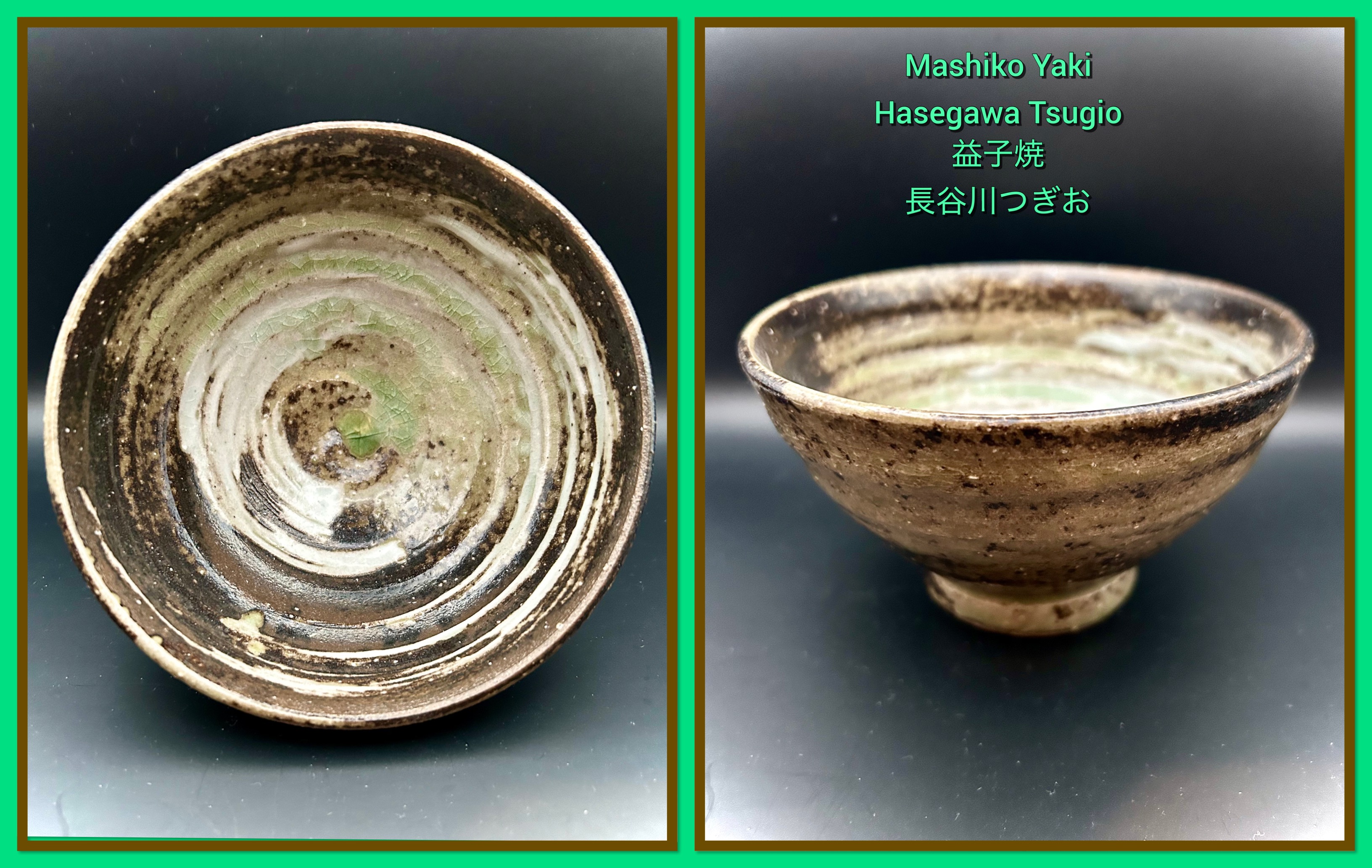
HASEGAWA TSUGIO (長谷川つぎお)
Mashiko-yaki tea bowl with Hakeme brushwork with pool of green glaze


************************************
UNMARKED or GENERIC MASHIKO


I found this flask in a second hand shop, without a mark, box or identification papers. Interstingly enough I found matching cups in another second hand shop. Because of the color and similar styles in the pottery of Okinawa I originally placed them in that category. I have recently discovered similar "ring" shaped flasks categorized as Mashiko, one with the box with Mashiko written on it. I will now place this flask and matching guinomi in the Mashiko category. It is an unusual shape even for Mashiko. I hope to find out more about this  style and will post when I know more. I do know that Mashiko potters, especially Shoji Hamada, did draw influence from Tsuboya yaki, the pottery of Okinawa.


Murasawa Hiroshi Kiln 村澤浩


Pictured used with permission of owner, Amy Dunn


Hiroshi Seto Seto Hiroshi
 Ceramic artist craftsman

 Born in Tokushima City, Tokushima Prefecture in 1941.  In 1964, graduated from Kyoto City University of Arts, Department of Crafts, Department of Ceramics.  Built in 1965 in Mashiko, Tochigi Prefecture.  From 1972 to 1973, he was invited to the United States as a lecturer at Indiana University and Colorado State University.  Since 1974, he has exhibited in domestic and international solo exhibitions and public exhibitions (invited artists) using striped patterns.  He passed away in 1994.

                  **************


******************

Mashiko-yaki tea bowl with Hakeme brushwork with pool of green glaze


************************************
UNMARKED or GENERIC MASHIKO


I found this flask in a second hand shop, without a mark, box or identification papers. Interstingly enough I found matching cups in another second hand shop. Because of the color and similar styles in the pottery of Okinawa I originally placed them in that category. I have recently discovered similar "ring" shaped flasks categorized as Mashiko, one with the box with Mashiko written on it. I will now place this flask and matching guinomi in the Mashiko category. It is an unusual shape even for Mashiko. I hope to find out more about this  style and will post when I know more. I do know that Mashiko potters, especially Shoji Hamada, did draw influence from Tsuboya yaki, the pottery of Okinawa.


Murasawa Hiroshi Kiln 村澤浩


Pictured used with permission of owner, Amy Dunn


Hiroshi Seto Seto Hiroshi
 Ceramic artist craftsman

 Born in Tokushima City, Tokushima Prefecture in 1941.  In 1964, graduated from Kyoto City University of Arts, Department of Crafts, Department of Ceramics.  Built in 1965 in Mashiko, Tochigi Prefecture.  From 1972 to 1973, he was invited to the United States as a lecturer at Indiana University and Colorado State University.  Since 1974, he has exhibited in domestic and international solo exhibitions and public exhibitions (invited artists) using striped patterns.  He passed away in 1994.

                  **************


Thursday, March 15, 2012

BANKO YAKI (万古焼き)-Ceramics of Mie Prefecture


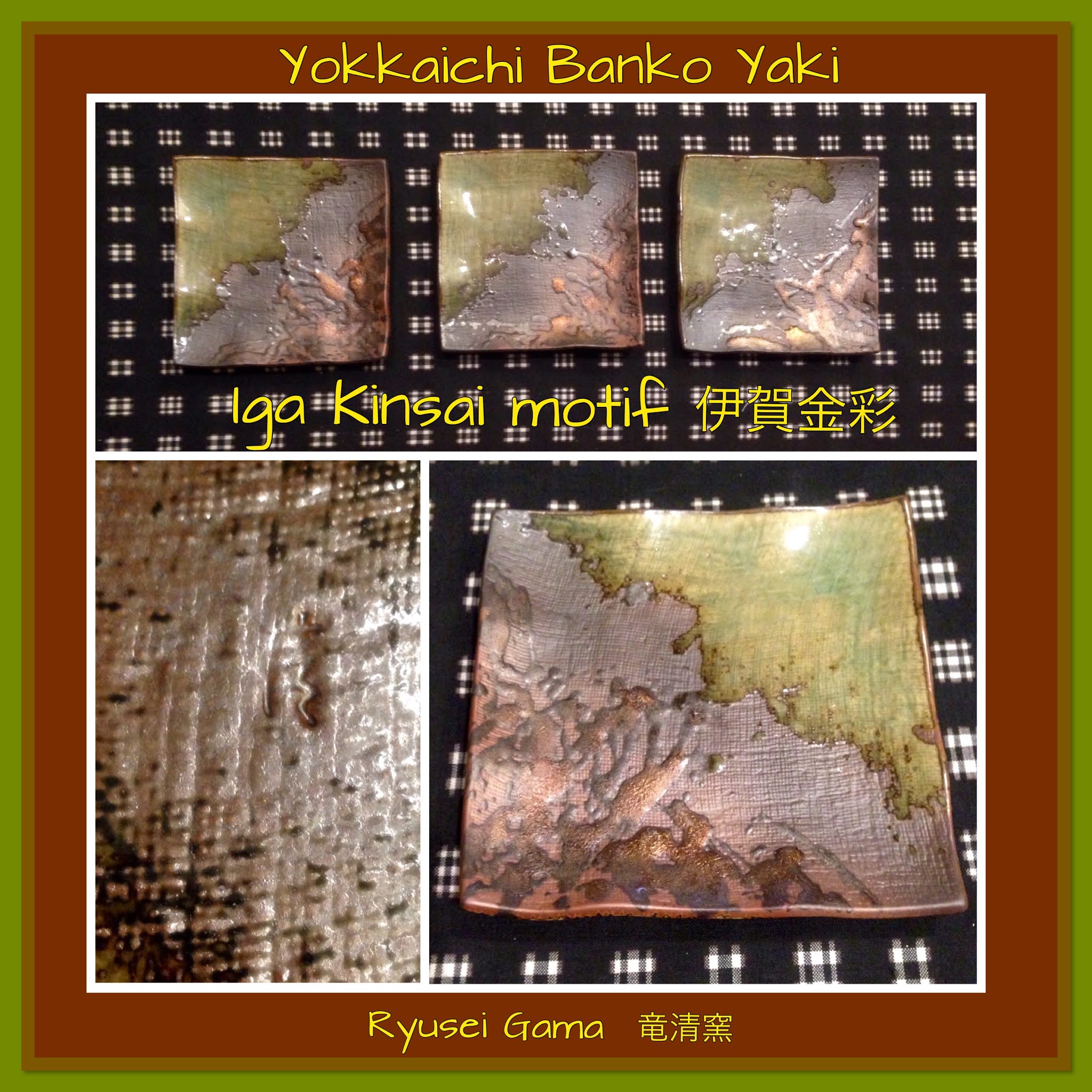
Bankoyaki is pottery from Mie Prefecture.  This is also called Yokkaichi Banko. A pottery merchant, Nunami Rozan, started a kiln near Ise Shrine 1736 and 1741. Annnelise Crueger, in her book "Modern Japanese Ceramics" p. 158, gives a brief but clear history. Rozan was summoned to Edo (Tokyo) to be the potter for the shogun. His work is called Ko-Banko, or old Banko.  He had no successor, but years later Mori Yusetsu bought the Banko seal from the family and began a kiln in Mie Prefecture where he created the light tea ware that became popular in the 1800's. Now days it is most famous for brown tea pots and the cookware for nabemono.

The Banko pottery that westerners are more familiar with was produced for export in Tokyo in the late 1800's through the mid 1900's. This Banko, also known as Asakusa Banko, is grouped with Sumida ware, and Poo ware. These are the Banko vases with the 3D carved shrine designs, as well as the "see, hear and speak no evil" monkey figurines. 
Banko ware made in Mie Prefecture is also an area that produces manyIkebana vessels.


Earthy Banko-yaki kyusuu tea pot
I have seen a book on Amazon "Fanciful Images: Japanese Banko Ceramics" by Barry Till.  I have not read it but thought I would  put it out there for those interested in Banko.


Banko-yaki makes a lot of everyday ware in Mishima design.  The kiln name for this piece is Ginpo.


Vintage Ginpo gama


Seishu Gama 勢州窯  太楽老作

Banko export ware Made in Japan mark


GENERIC BANKO MARKS

Right to left 萬古  (Banko)


History Links:

https://kogeijapan.com/locale/ja_JP/yokkaichibankoyaki/

Contemporary Banko potters link

http://bankonosato.jp/wp/exhibition/sakkaten/


Wednesday, February 22, 2012

TOBE YAKI (砥部焼き)-Ceramics of Ehime Prefecture


Tobeyaki is the pottery of Ehime Prefecture. It is usually a white porcelain with indigo blue arabesque design.  It oft times has a bit of red incorporated in the design as well. It was founded in 1777. There are over 90 kilns in the Tobe area.
Old Tobe Yaki is much different than what is produced today. They used to produce Tokkuri, some rather rough, others of the sometsuke variety. Some of the sometsuke are often confused with similar products made in Imari. 
The wares of the Taisho period were often made with patterned stencils. Tobe wares dwindled in the early Showa period, but were revitalized in 1953. Although Tobe ware usually is recognized by the thick arabesque designs, they also produce other styles. 
Some common attributes of Tobe ware is the thickness, rounded rims, simplicity of design and the thick brush arabesque motifs. Tobe ware is noted for its ability to showcase food through it's simplicity. Modern Tobe ware also includes a patchwork style. 
(Notes taken from an NHK World presentation on Tobe ware). 


This was made at least 30 years ago.  There is no artist mark.


Tobe Shuzan


Probably Kenzan-gama MARK


                  Mini vase


                                 Sake cup or choko 

   This this is the Baizan Gama MARK


I recently found out about a less known Tobe ware. It has a carved out design, a 3D relief on the side.  It appears that there was a time when this style was popular in various regions of Japan. I will keep my eye out to try to find a piece to share.

Tobe Yaki Namiroku Gama 砥部焼 波六窯 (Tomosawa Namiroku 友澤浪六)

A helpful link in Japanese for the Tobe Kilns:


http://www.tobeyaki.org/kamamoto.html
http://www.tobeyaki.org/kamamoto/001.htm

Tuesday, February 21, 2012

Pottery Paradise.....a trip to Arita, Karatsu and Okayama

I just got back from a trip to Kyushu with my husband, where we were able to visit some kilns and shops in Arita and Karatsu. On our return we were able to make a stop in Okayama to see some Bizen ware as well.  We had the luck to meet and talk with an American Bizen artist, John Thomas Wells, who has made his home in the mountains of Bizen now for over 30 years.  We were able to see some of his work in the Takashimaya Department store exhibit, just as they were packing it all up! John was kind enough to let us in to see some of his works and to talk with us for a while.  We really appreciated the opportunity! 
After visiting kilns and seeing the process of making these beautiful wares I gained a greater appreciation for their value. I will be incorporating the information I obtained on this trip into each respective category along with some other samples and marks.

Monday, January 9, 2012

KASAMA YAKI (笠間焼)-Ceramics of Ibaraki Prefecture


Kasamayaki is from Ibaraki Prefecture.  It was influenced by a Shigaraki yaki potter when founded in 1772.


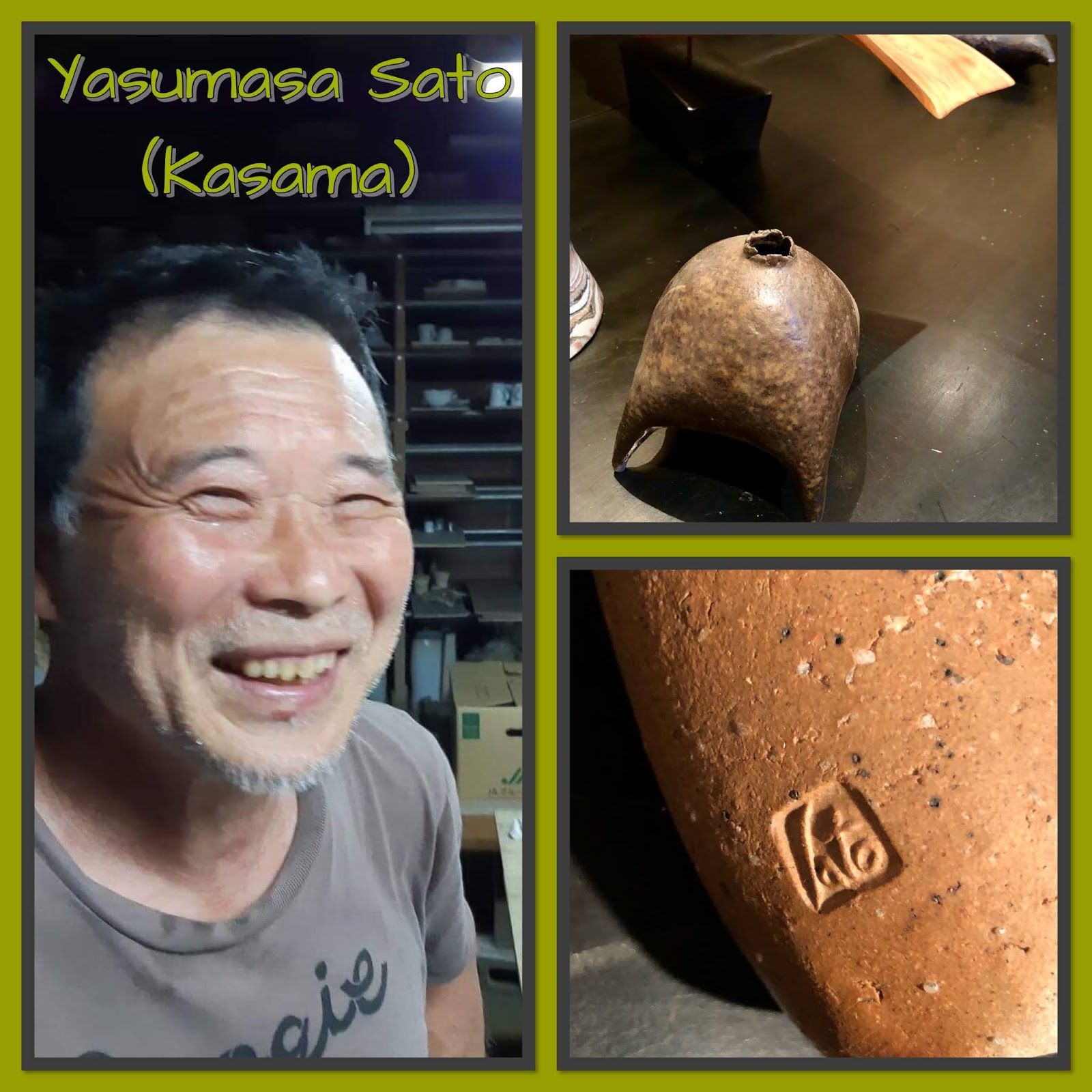
Yasumasa Sato


Miyake Tōen

Kasamayaki Hashioki


Saturday, January 7, 2012

ŌTANI YAKI (大谷焼き)-Ceramics of Tokushima Prefecture

Ōtaniyaki originated from a potter from Kyushu named Bunemon in 1780. An official pottery kiln was established in 1781 but closed after a short time. Later a potter named Chuzo taught the art of pottery (large jars) to the people of Ōtani. Ōtani pottery has changed over the years but tends to be rustic in nature.


Featured Post

Helpful Vocabulary When Researching Japanese Ceramics

Vocabulary when searching for Japanese Ceramics *I will be adding to this list Dating   ( 江戸) Edo Period (1603-1868)   (江戸 前期) Ea...