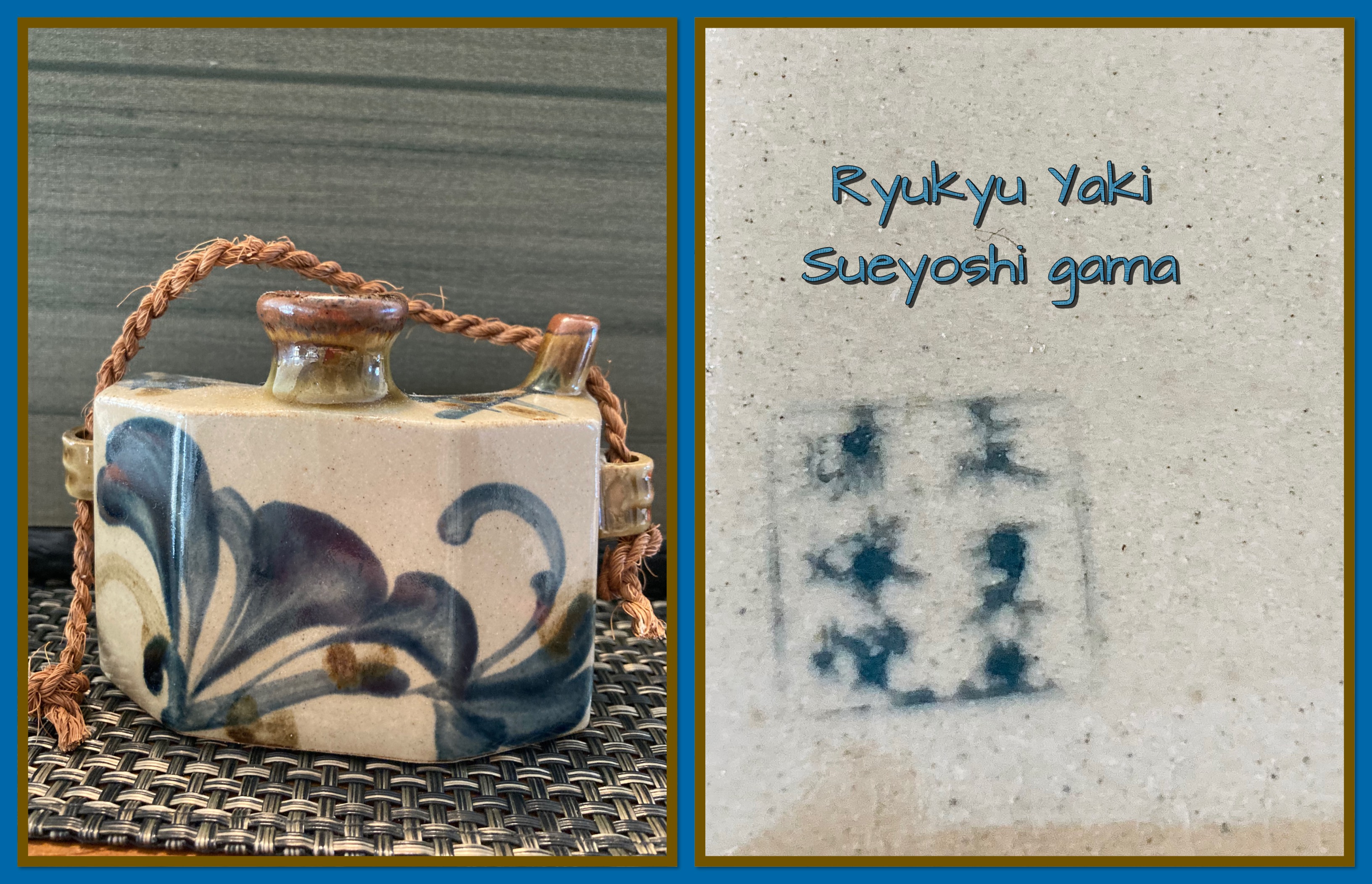
Although my blog emphasizes "modern", one cannot discuss Japanese ceramics without understanding its past.


Aoki Junichiro (1863-1955)


This plate is a sansui/some-nishiki motif.
 19th century Imari Iroe (色絵) 28cm plate with Hana Kago center motif

 Antique Imari cover for a bowl

ARITA BOTTLE/VASE
 29 cm tall (15") 73cm around at widest part circa late Edo period


 Shida Yaki. Late 1800's Meiji era, Imari sometsuke plate 29cm in diameter. It has six stilt marks, no additional markings.
IMARI DISH-Meiji era
 17cm wide 12.5 cm tall

IMARI DISHES

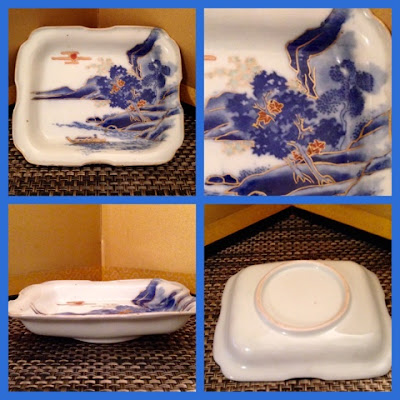 15cm wide 12.5cm tall Imari sansui some-nishiki plate


 FUKI CHOSHUN
 Imari oval plate, no mark.

 Three Friends of Winter (sho-chiku-bai) central motif with Uzu-Fuku mark
 Edo period Imari plate with Uzufuku mark (attributed to Kakiemon).
 Zoshuntei Sanpo Zo 蔵春亭三保造
FUKAE SEI


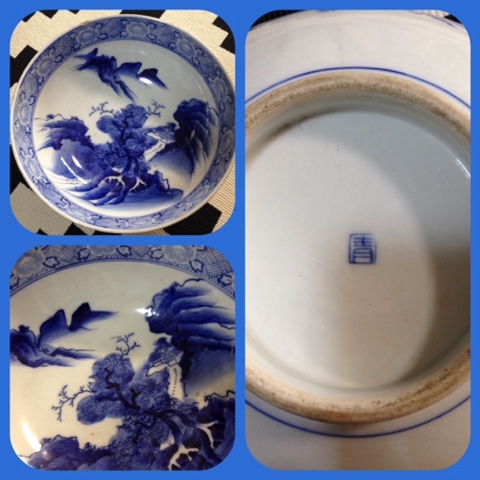
This sometsuke bowl motif is called Sansui....a land and seascape, which can include craggy rocks, water, mountains, a small structure and sometimes a boat.

Some-nishiki plates. Kaku Ao with red "久"?

Here is another Aoki mark used @the Taisho period
******************
 |
| Yoshi MARK |
 |
The red Hizen MARK in the center of this plates was common in the Meiji Period 1868-1912
This is a lid with the Hizen mark
 This bowl is 13cm in diameter |
🌿🌿🌿🌿🌿🌿🌿🌿🌿🌿🌿🌿🌿🌿🌿🌿🌿🌿🌿🌿🌿🌿🌿
 |
| This small 10.5cm Sometsuke plate is probably from late Edo to early Meiji Period (1860's) 🍃🍃🍃🍃🍃🍃🍃🍃🍃🍃🍃🍃🍃🍃🍃🍃🍃🍃🍃🍃🍃🍃🍃 |
 10 cm Sometsuke Ko-Imari plate (小皿) with rough Kinsugi golden repair 🌸🌸🌸🌸🌸🌸🌸🌸🌸🌸🌸🌸🌸🌸🌸🌸🌸🌸🌸🌸🌸🌸🌸🌸 |
Imari sometsuke tea cup late 1800's
🍂🍁🍂🍁🍂🍁🍂🍁🍂🍁🍂🍁🍂🍁🍂🍁🍂🍁🍂🍁🍂🍁🍂🍁🍂


🍃🌿🍃🌿🍃🌿🍃🌿🍃🌿🍃🌿🍃🍃🍃🍃🌿🍃🌿🍃🌿🍃🌿
Antique Tokkuri

These bottles were made in Arita as well as in Tobe. This may be either. They are all very similar and unmarked.

Sometsuke Rocks and Peony motif (岩牡丹染め付け)
🌾🌾🌾🌾🌾🌾🌾🌾🌾🌾🌾🌾🌾🌾🌾🌾
These little bowls came in a very old wooden box. There were ten bowls, but three had small chips. I believe these may be soba choko or perhaps bowls for simmered vegetables. The painting on them is very fuzzy so it is not my iPhone's fault.

Sometsuke flower shaped rim with simple "mikomi" center design, Circa 1850's
LINK:
http://www.meiji-imari.com/en/meijiimari_en/meijiimari03.html
 Imari Sometsuke small hand painted dish with bird, squid, fan, and other traditional patterns

 Imari Iroe 16cm bowl with "Snake's Eye" foot, circa mid to late 19th century


Sometsuke Tea bowl with mark somewhat similar to the one above.


Small Meiji era hand painted Sometsuke bowls with snake eyes variation on the foot.
Nazuna Flower motif. c. 1900


This also has a "sho chiku bai" motif probably late Meiji/ early Taisho era.

This is a top found on the bottom shelf at a charity shop. It has the Kakutomi mark on it. This is probably mid Meiji period.


IMARI DISHES

16.5 cm diameter, The center is a pomegranate motif, alternating Longevity mark and form of red "fern" Shida Karakusa on the outer panels.
IMARI PLATE


Some snapshots from an Auction house

🍃🍃🍃🍃🍃🍃🍃🍃🍃🍃🍃🍃🍃🍃
Imari with spurious Chinese reign marks as decoration
Abalone shaped dish 16.4 cm x 13.5 cm

Sei Ka Nen Sei (成化年製)

19th century small bowl in the "Kikka" (菊花) chrysanthemum motif. Kikkagata zara-chrysanthemum shaped plate. The flowers have 16 petals both in the outer shape as well as in the center. The back mark is a Chinese mark used on Japanese wares from the mid Edo period. 奇玉宝鼎之珍 (In Japanese would read: ki gyuoku hou tei no chin). **This may be Daishoji Imari

Spurious "Dai Min Sei Ka Nen Sei" mark often found on Japanese antique porcelain.

These are tops to bowls. Fuki cho shun marking.
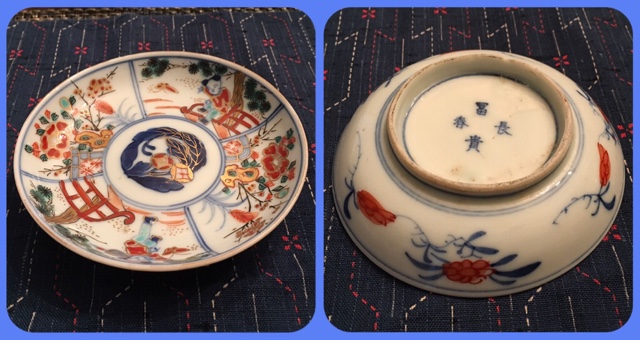


FUKAE SEI

*************************

Seiji-Sometsuke with Ken Mark
This mark is generally found on late Edo/Bakumatsu period wares. It refers to the old Chinese Quianlong period but is used only as decoration.
*Keep in mind that the Ken mark was also used on repro's in the mid 20th century. Look for other indicators of age.

Iro-e Namasu dish with Snake’s eye foot. The mark reads Man Reki Nen Sei.