Monday, April 14, 2014

UNKNOWNS


Suizan? Eizan? I believe this is Kyo yaki. Needs verification.


My new tea Bowl. The motif is is called Manjugiku. The mark reads Kyo Rouzan (京瀧山)


                                             *********************************************************

No mark on this little covered dish. Arita? Kyoto? What is it used for?


Studio cup and plate set with unidentified mark.


  This bowl has no mark but hopefully someday I will find out its origins. It is one of my favorites.


I just found this little guinomi (sake cup). It needs some research.
It is probably Imari  transfer ware. The mark reads HO.


I just found this little condiment dish, used for shichimi togarashi or seven spice pepper.  There is no mark. It may be Arita, Kyoto or Mino??
    I believe this is Arita ware, but need to verify.

  Ka (加). ?
    

I am working on this little sake cup. I bought it even though it had a chip. I do not have this mark in my files and decided it was worth the research. I think I have seen this before so my curiosity is peaked.


I think this might be Korean


Dragonware with marking IISA

Wednesday, April 9, 2014

The Beauty of Teabowls

I don't even drink tea, but I love all the varieties of Japanese tea bowls. There are so many shapes, glazes, and designs!  


Wednesday, March 26, 2014

A great reference site for Japanese tea bowls.
If you love Japanese tea bowls, please visit http://www.rikyucha.com. They have a large assortment of tea bowls as well as other items, with information in English!! 

Saturday, March 15, 2014

SHODAI YAKI (小代焼き)- Ceramics of Kumamoto Prefecture


Shodai yaki has a history of 400 years. It has a rich iron content and is categorized as Mingei or folk art pottery. I fell in love with the many on display at the craft center in Kumamoto. This is one of my favorites. I only wish I had time to visit the actual kiln as Mr.  Inoue's work "speaks to me".

      This is made by Inoue Taishu (井上 泰秋) of Fumoto Gama


I just returned from Japan. Although it was not a vacation, I did manage to visit a wonderful display of vintage pottery at the Kintetsu Department Store in Osaka. One of my purchases was this lovely tea bowl by second generation Shirohei of Shirohei-gama. Shodai pottery died out in the early 1900's but was revived in the mid 20th century. One of the revivalists was Joshima Heijiro of Shirohei-gama. His son, Eichiro was the second generation. The current master of Shirohei-gama, son of Eichiro, is Joshima Nobuaki. 


Link to information on Shirohei-gama (in Japanese)

Thursday, February 13, 2014

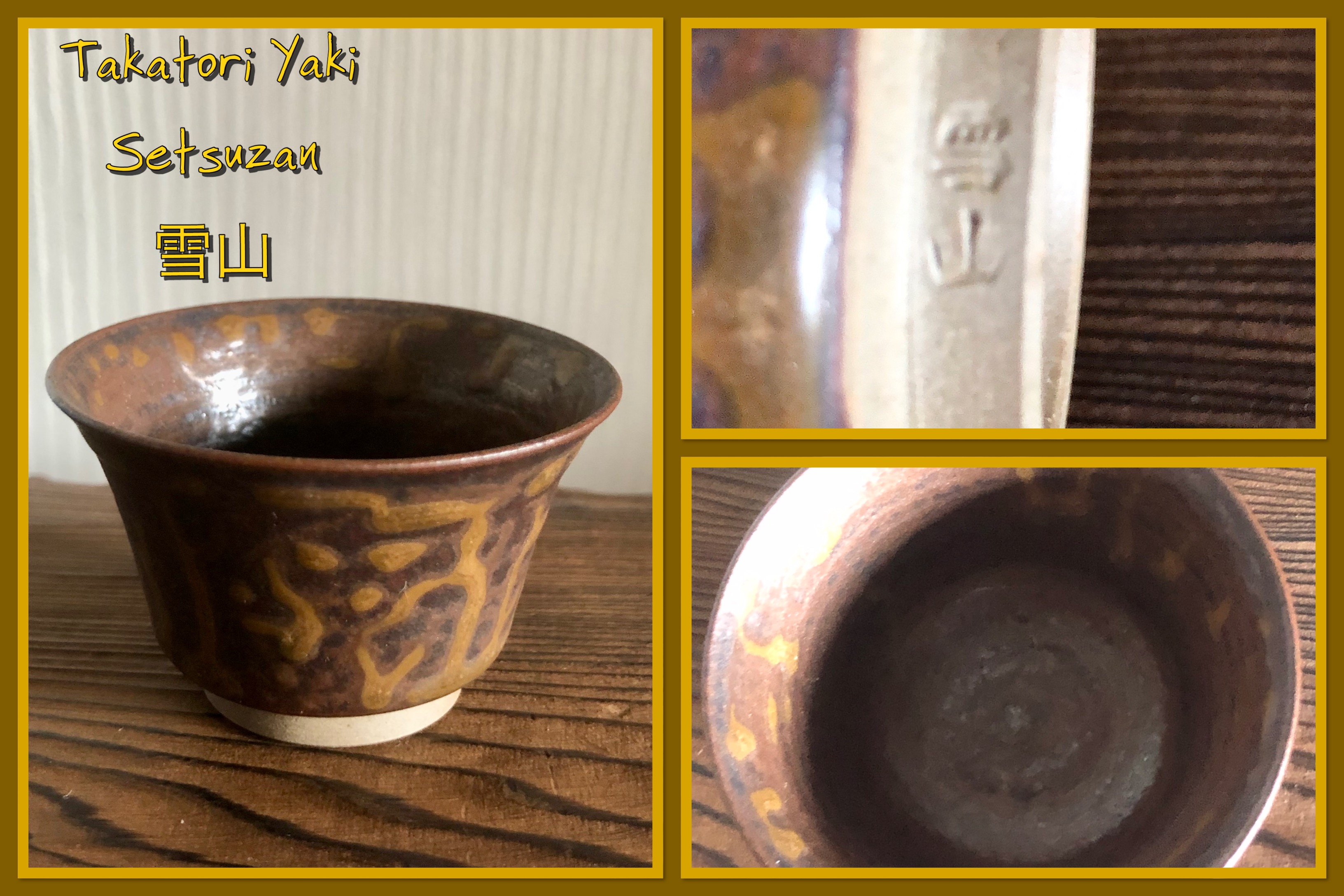
TAKATORI YAKI (高取焼き) Pottery of Fukuoka Prefecture


TAKATORI HASSEN 12th 十ニ代高取八仙


13th Takatori Hachizan 十三高取八山


LINK:  www.takatoriyakisouke.com

Also from the same kiln......a guinomi by Takatori Nanae


              Nanae MARK
  
************************************

KAMEI MIRAKU 


     Takatori yaki tea bowl by KAMEI MIRAKU 14 Kiln


                                                                  Kamei  Masahisa (Miraku 15)


Examples of very old Takatori Yaki from the Kamei Miraku museum

Made by Kamei Miraku's son Hisaaki


                                               Made by Master potter Kamei Miraku 14

*************************


****************************************************
Takatori Seizan kiln 


***************************************************************

高取焼永満寺窯たかとりやきえいまんじがま 

Takatori Eimanji gama

〒822-0005 福岡県直方市永満寺2045-1 (located in Nogata)


Shimizu Chikuzan


*********************************************

Below appears to be a generic Takatori MARK


       Takatori yaki sake cup 


                                                 Soba Tokkuri with generic Takatori mark


Guinomi with generic Takatori mark


Thursday, January 23, 2014

OBSCURE KILNS

There are many kilns throughout Japan that are unknown to many in and outside Japan. This is a working list of many lesser known kilns by prefecture, beginning in the north and working south and west. The kiln names have been gathered from many sources. For additional information on older kilns see "The World of Japanese Ceramics" by Herbert H. Sanders, "The Art of Japanese Ceramics" by Tsugio Mikami and "The Japanese Pottery Handbook" by Penny Simpson. Included in this list are old kilns that may no longer exist, local kilns that have long histories and newer kilns that have risen up in the last century. 

AOMORI
Hirosaki
Akudo

IWATE
Kokuji
Kuji 

AKITA
Naraoka

YAMAGATA
Shinjo
Hirashimizu

MIYAGI
Kirikobe
Tsutsumi


FUKUSHIMA
Tatenoshita
Aizu

NIIGATA
Aikawa
Sado/Mumyoi


TOCHIGI
Maganoshima
MIKAMO

TOKYO
Edo Banko
Kenzan Iriya
Korakuen
Sumidagawa
Edo Kikko
Toyama

SHIZUOKA
Shidoro

TOYAMA
Etchu Seto
Kosugi

ISHIKAWA
Ohi
Kasugayama


FUKUI
Hisaka
Oda


AICHI


GIFU

MIE
Akogi (Banko ware beginnings) 


KYOTO
Asahi 
Tango

 
SHIGA
Koshu
Rakurakuen
Shimoda
Takahara
Zeze

OSAKA
Kosobe
Takahara
Nanba
Kikko

NARA
Akahada

WAKAYAMA
Kairakuen
Otokoyama


HYOGO
Higashiyama
Mita
Sanda

TOTTORI
Kazuwa
Ushinoto

OKAYAMA
Mushiake
Shizutani

SHIMANE
Banshozan 
Daito
Fujina
Gotsu
Oda or Ota
Sesshu

HIROSHIMA
Himedani

YAMAGUCHI
Horikoshi

KAGAWA
Kankake 
Tomita

KOCHI
Nosayama
Odo


FUKUOKA
Asakura
Hikosan
Ichinose
Kangetsu
Noma
Sasada
Sue
Takaba


SAGA
Kuromuta
Shiinomine
Shiriaishi
Utsutsugawa


NAGASAKI

OITA
Onta
Tenryo 
Yabakei

MIYAZAKI


KUMAMOTO
Amakusa
Futagawa
Hirayama
Isshochi
Koda
Shodai
Uchisarayama
Yatsushiro

KAGOSHIMA
Chosa
Hirasa
Kushikino
Naeshirogawa
Tateno


Saturday, January 11, 2014

KOI-not ceramic but very fun!

This is not Japanese ceramic, it is made of cast iron, but it blends so well with my Japanese ceramic collection.  It is a lantern. I think it has a lot of character!

Featured Post

Helpful Vocabulary When Researching Japanese Ceramics

Vocabulary when searching for Japanese Ceramics *I will be adding to this list Dating   ( 江戸) Edo Period (1603-1868)   (江戸 前期) Ea...