Thursday, November 17, 2016

NABESHIMA YAKI-Ceramics of Okawachi, Imari, Japan


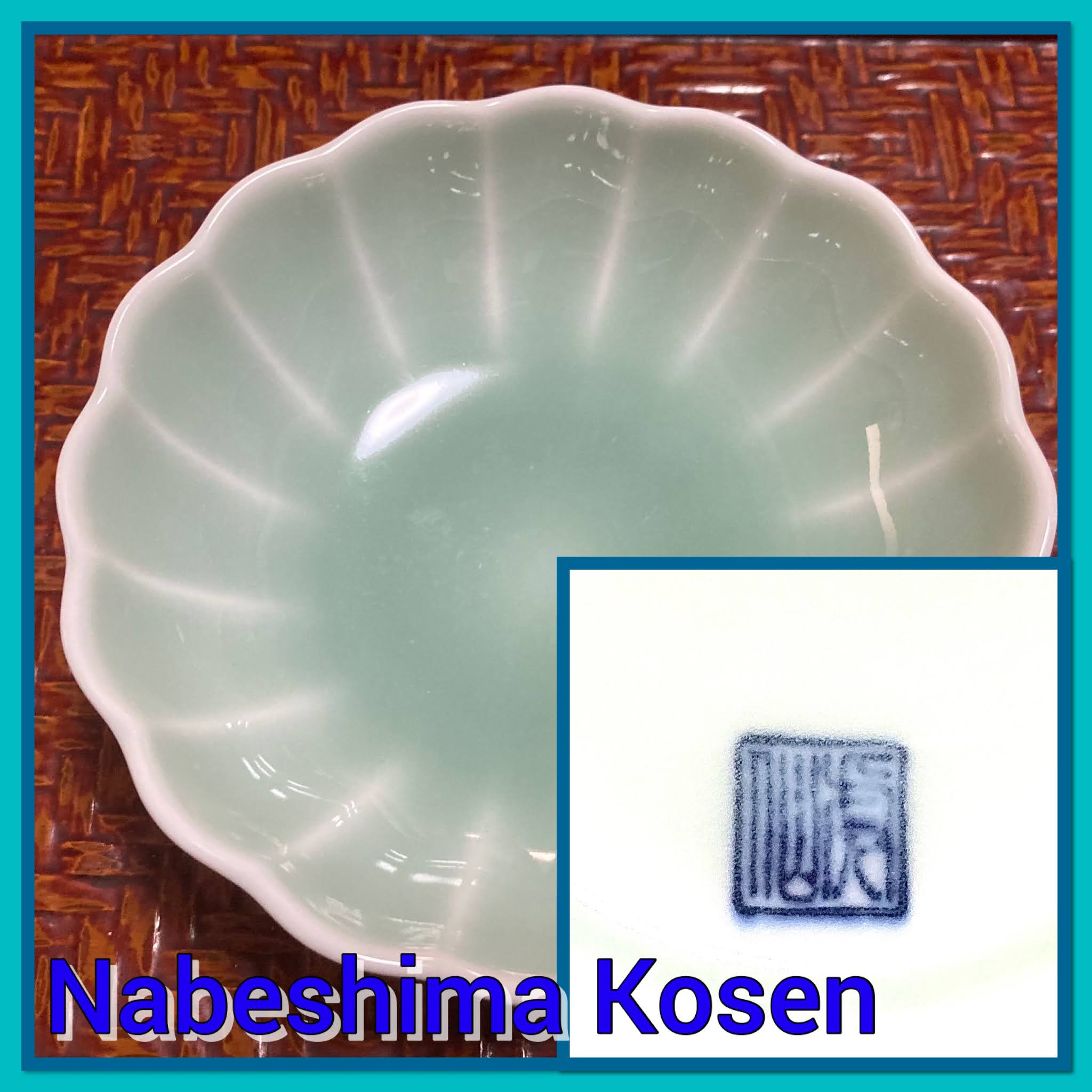
    This has a similar mark to the Okawachi Oniwa Kiln Ichikawa Koshun
Kiln but is slightly different.

大川内の御庭焼 市川光春


鍋島 虎仙

Kosen Gama


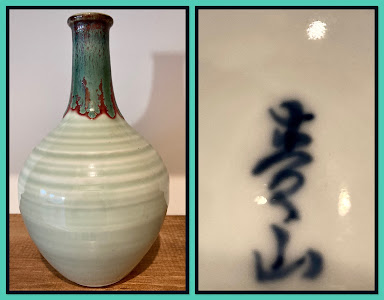
Seizan 青山


Sunday, October 23, 2016

TOBISEIJI 飛青磁


Tobi Seiji 飛青磁, literally means "flying Celadon" in Japanese. It is a style of ceramics that refers to the Chinese Longquan ceramics of  the 13-14th centuries. This style is highly regarded in Japan. It is often found on tea ceremony ceramics, especially from Kyoto. 


Monday, September 26, 2016

Ei-Sei-Sha: Ceramics of Himeji 姫路永世舎 (社)

This mark was a long time coming but am so pleased to finally know its origin.

Ei Sei Sha was established in 1877 (明治十年) in Himeji by Matsumura Tokimasa (松村ときまさ) who was born in 1838 in Hizen Arita Saga Prefecture. 


https://kotobank.jp/word/松村辰昌-1111248
http://nippon-porcelain.com/兵庫県、永世舎の花瓶/
http://www.hijiriya.com/himezi_image2.html

Thursday, September 15, 2016

Importer-Seymour Mann, Inc.

Seymour Mann Co. inc was founded in 1946. They imported many products made in Japan from knick- knacks, and figurines, to vases and dinnerware.

       Vase from Mann's Imperial Dynasty line 

Friday, August 26, 2016

Bakumatsu Blue

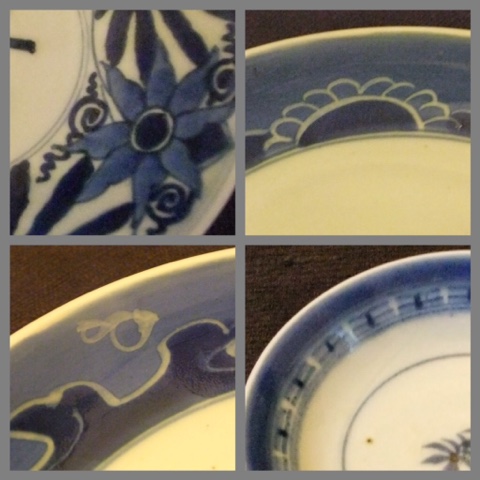
While researching ceramics of the Edo Bakumatsu period (roughly 1853-1867) I noticed a blue color combination (medium gray/blue with a darker, but not cobalt blue, often  with (墨弾) Sumihajiki, a resist method used to on ceramics to leave white areas when painted or glazed.  I will call this "Bakumatsu Blue". Not all ceramics made during the Bakumatsu period used this blue combo, but it was widespread.  Similar combinations were used much earlier in the Edo period with slight variations. 


Tuesday, August 23, 2016

Friday, August 19, 2016

Yamatoku with additional decorator marks

I am researching Yamatoku marked plates that include additional markings. It appears that Yamatoku produced blanks which were then decorated by others. I have found several marked by decorators.

Thanks to Maggie Xiao for permission to use her pictures 


Hizen Arita  decorated
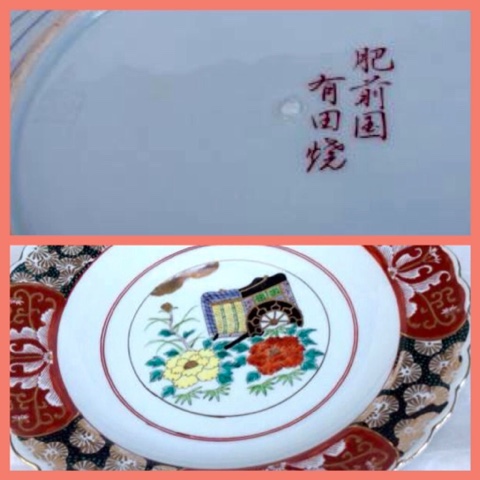
The Yamatoku ヤマトク mark is off to the left side combined with the red Hizen/Arita mark


Tetsuka decorated

The Yamatoku ヤマトク mark is at the top with the red 
Tetsuka テツカ mark (up side down) on the bottom. 

Tetsuka or Tezuka is often found with the Yamatoku impressed mark

Here is an example of a Taisho era blue mark with Yamatoku impressed mark


A Matsu mark with a roof meaning house of Matsu. The decorator?


 This mark is sometimes found on Yamatoku pieces.


Tuesday, August 9, 2016

Lefton China-imported from Japan


Lefton China was a US importer of Japanese china wares, figurines and novelties. Although the company was founded in 1941, it was after WWII that they imported wares. Some will have "Made in Occupied Japan" but most will just have some variation of Lefton China, Handpainted, Japan. The company was sold in 2000. 

Thursday, July 28, 2016

Shimamura Sei (島村製) made by Shimamura


Shimamura decorated porcelain for export in the latter Meiji period and early Taisho period. 

http://blog.livedoor.jp/momo2011/archives/2459846.html

Featured Post

Helpful Vocabulary When Researching Japanese Ceramics

Vocabulary when searching for Japanese Ceramics *I will be adding to this list Dating   ( 江戸) Edo Period (1603-1868)   (江戸 前期) Ea...