Friday, March 31, 2023

USHINOTO YAKI-Ceramics of Tottori Prefecture (牛ノ戸焼うしのとやき)

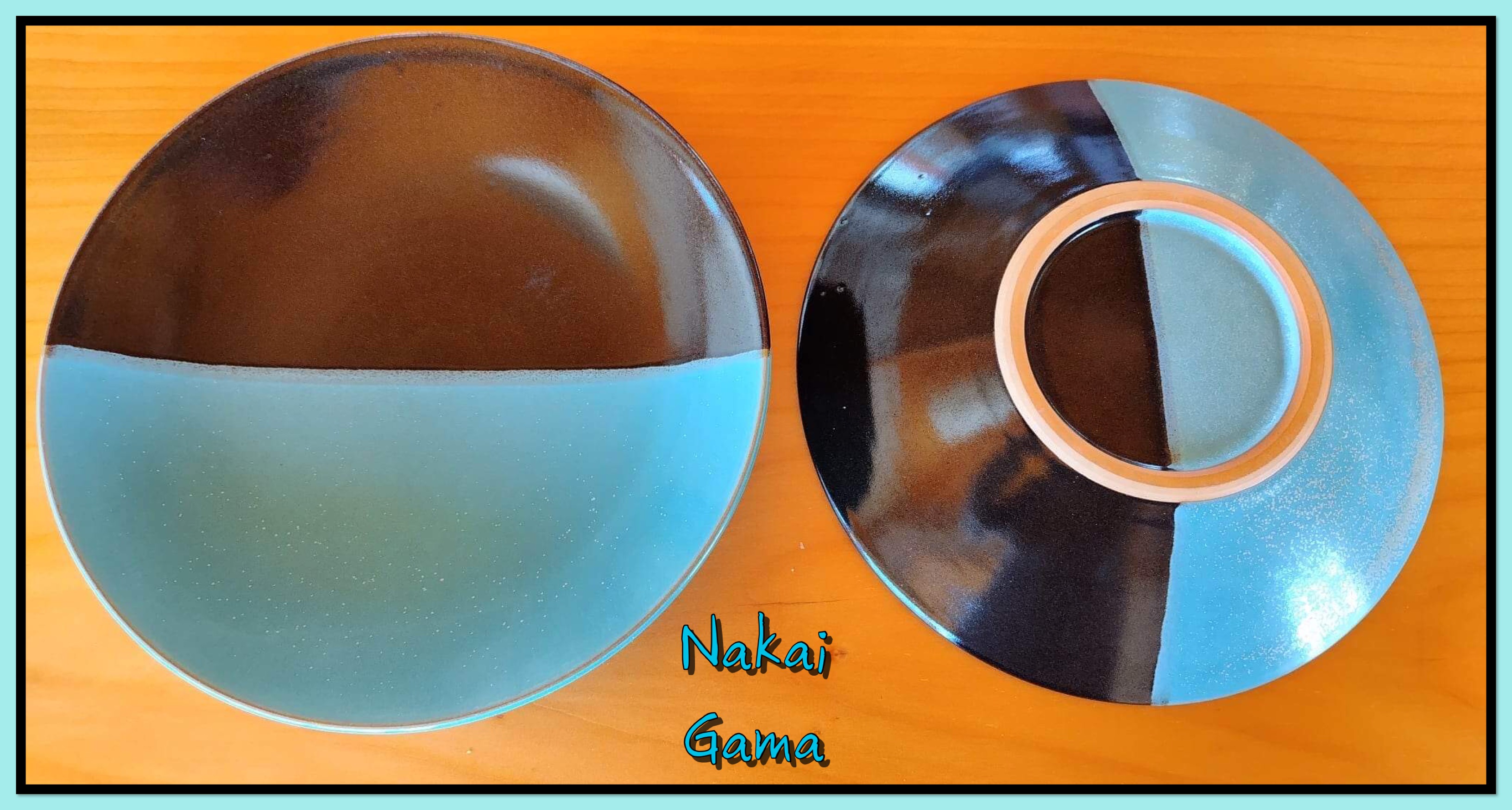
Made in Tottori city, Tottori Prefecture, Ushinoto ware is considered a folk pottery. Though it existed before the Folk “Mingei” movement, the kilns were highly influenced by the movement. Probably the most well known aspect of Ushinoto is the plate separated in two or three parts using bluish green and black or a bluish green, black and creamy white. They do make many other styles as well. Apparently the style originated back in the Edo period. When Dr. Yoshida Shoya showed the old designs to Yanagi Soetsu  who gave his opinion on the best of the designs. It is now produced by two kilns, the Ushinoto kiln headed by Mr. Kobayashi and the Nankai Inshu kiln headed by Mr. Sakamoto. I’m very thankful for the help of Alice Gordenker for the pictures and information concerning this style. 


ECHIZEN YAKI-Ceramics of Fukui Prefecture


Monday, March 20, 2023

Yūmachi Yaki 湯町焼-Ceramics of Shimane Prefecture

 This type of ware is highly influenced by the Mingei Movement. The clay tends to be reddish and the glazes can be yellow, cream, brown and some blues. Leach style slip ware is common as is the influence of Mashiko potters like Hamada Shōji. There is some influence of the Koishiwara/Onta style of tobigana chattering in some. As with many Mingei potters the wares of the Yūmachi kiln go unmarked. 

Monday, January 23, 2023

MIHAMA YAKI- Ceramics of Mie Prefecture

 Mihama kiln began in 1959, producing mostly tableware. It went out of business in 2006. 


Sunday, November 6, 2022

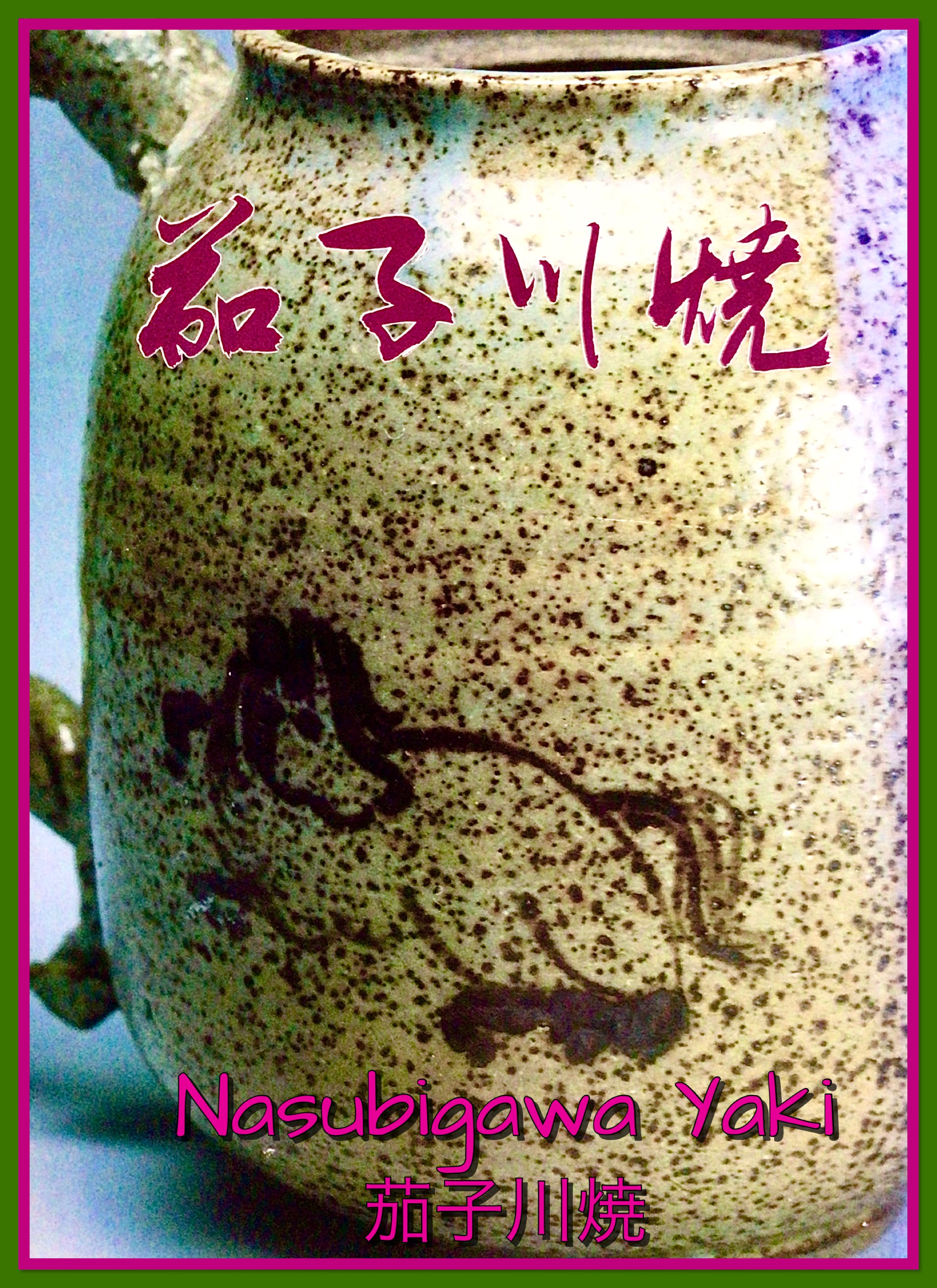
NASUBIGAWA YAKI (茄子川焼)


I am researching this kind of ware. The kilns seemed to produce many styles, imitating some popular styles of the time.


 An edited rough translation of a marker by Sakamoto District Cultural Heritage Preservation Society. 

“It is said that the first time for the Nasubi river ware was around 1587, when Kichiemon Kato in Seto came to the kiln in Suwa and fired glazed pottery. In 1832, Kuemon Niwa of Hirokute tried to improve the pottery production that he started last year, and welcomed Kihei Kato from Tsumagaki Village, Toki County as his master to manufacture porcelain. In the eighth year of the same year, Toshihiraji Shinohara started making pottery in the same Hirokute, and in the fourteenth year of the same year, Shinkichi Yasuda called on the local people in front of Suwa to make porcelain. The Nasubi river ware developed after Toshihiraharu Shinohara built a five-chamber climbing kiln in 1845 in collaboration with Kakuzo Mizuno, who came from Ecchu (Toyama Prefecture). The most popular one was "Esugagawa Soma" which resembled Soma ware in Oshu, which created a unique elegant taste made by firing with namako glaze on clay. When the kiln stock system was abolished in the Meiji period, Koigahei's Kyuzaemon Fujii, in collaboration with Eihachi Suzuki, invited craftsmen from Kutani to fire Kutani-style tea utensils that are rare in the Nasubi River. There are many sales channels in the direction of Kiso, Ina, and Matsumoto, and it was sold to the people traveling on the Nakasendo Road at teahouses and potteries on the pass, and it continued until the end of the Meiji period as an important industry in the village.”

Thursday, November 3, 2022

KOKUJI YAKI (小久慈焼)-Ceramics of Iwate Prefecture

Kokuji Yaki originated in northern Iwate. By the mid 20th century it was on the verge of distinction because there were no successors to the kilns. Mr. Shimodake Takeshi went to study ceramics in Seto. He returned to the area and with Mr. Kumagai Ryutaro established an association to help train potters to revive the area ceramics industry.


  Basic information from this book, Japanese Ceramics visits to traditional kilns, East region. 


Tuesday, October 25, 2022

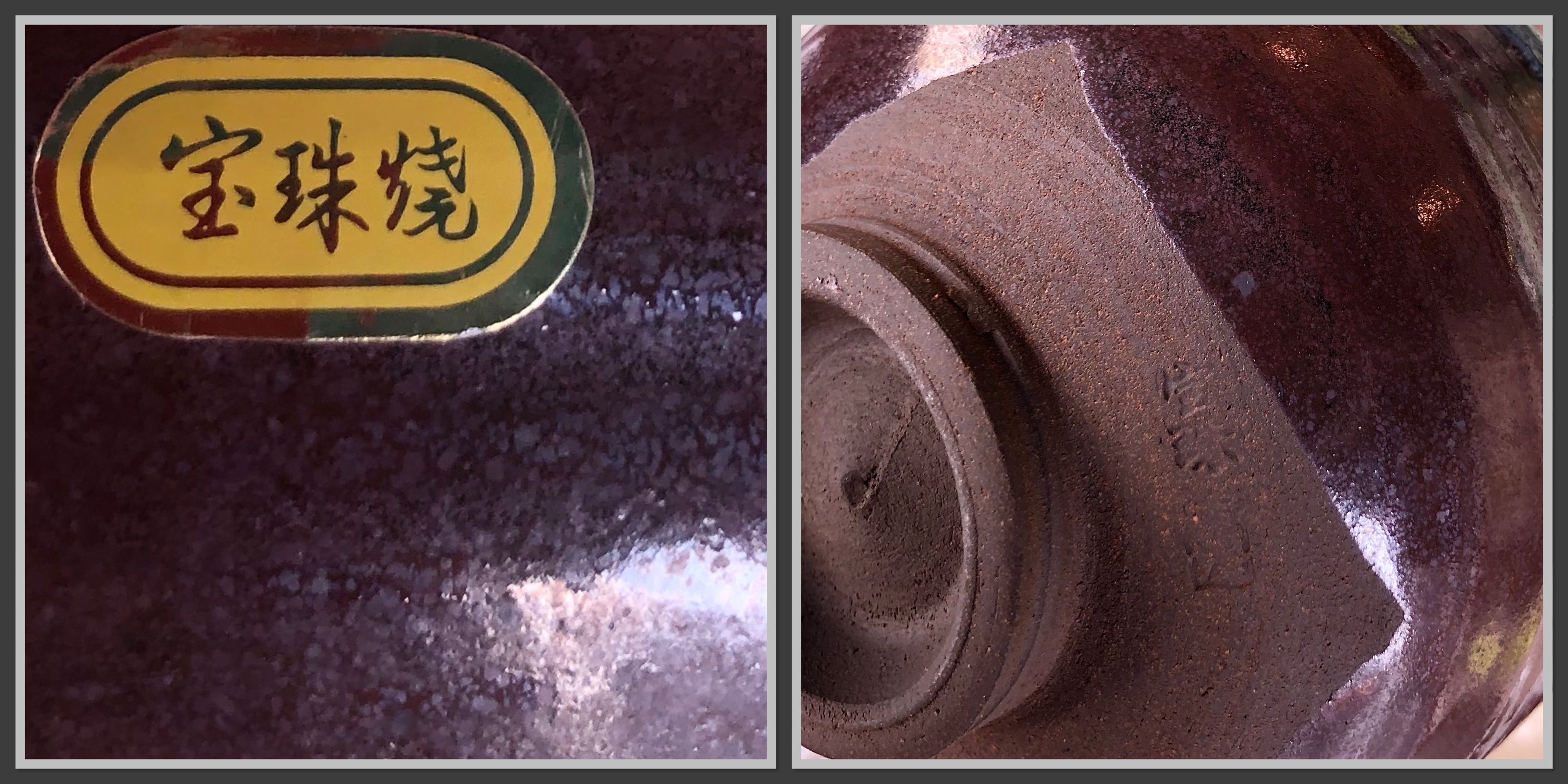
HŌJU YAKI (宝珠焼)- Pottery of Fukuoka Prefecture


A former village area in the southeastern part of Toho Village, Fukuoka Prefecture. In 2005, it merged with Koishiwara Village to form Toho Village.  There is a Hoju-yaki kiln in the coal mine ruins. 


Hōju Yaki by Gazan 


Harada Gama


Thursday, October 20, 2022

TACHIBANA YAKI-Ceramics of Aichi Prefecture

 Tachibana Yaki is most noted for making ceramic hibachi. They seem to be a subset of Tokoname Yaki of Aichi Prefecture. 


Thank you to Gina McLean for the use of her photo


Friday, October 7, 2022

Ikebana Vessel Production Ware

Work in progress: 


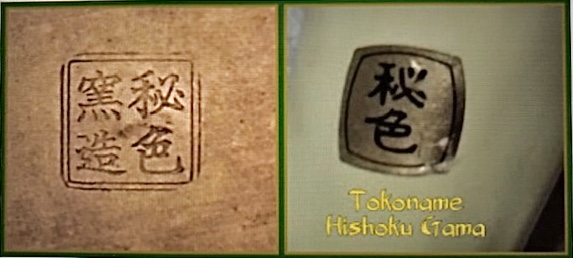
Hishoku Kiln (秘色窯) This is Tokoname Yaki, of Aichi Prefecture


Kōzan (光山) This is Yokkaichi Banko, of Mie Prefecture


 Sansai-En (三彩園) This is Tokoname Yaki, of Aichi Prefecture. 


Shōraku (勝楽) This is Yokkaichi Banko,  of Mie Prefecture


Yamasan (山三窯)


Yamatei 


Toyo 東洋


Oomiya Toen is a factory in Mie Prefecture. High volume ceramics. 


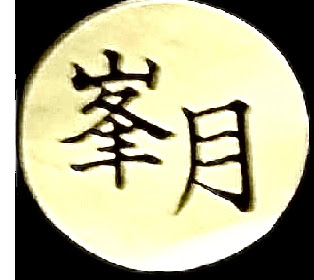
I’m not sure of the reading ( Seppō or Yukimine) but are made in factories at Yokkaichi Banko, Mie Prefecture. 


Kagetsu 華月


紫雅

Banko Yaki Hōgetsu


草月 Sogetsu 


           Arita Yaki Kozan kiln 琥山窯 


Saturday, July 30, 2022

AMORIGAWA YAKI-Pottery of Kagoshima

                                        Photo used with permission from owner, Kristen Fretcher


Amorigawa Yaki is a kiln from the Satsuma Area (Kagoshima) on the southern Island of Kyushu. This is an obscure kiln settled in the area of Kirishima on the border with Miyazaki Prefecture. The area is volcanic and has onsen hot spring resorts. 
 

Featured Post

Helpful Vocabulary When Researching Japanese Ceramics

Vocabulary when searching for Japanese Ceramics *I will be adding to this list Dating   ( 江戸) Edo Period (1603-1868)   (江戸 前期) Ea...