https://nippon-kichi.jp/article_list.do;jsessionid=79DB87323F187FC72E5CF755F819E9C4?p=308&ml_lang=en

You are invited to come along with me as I learn about Japanese ceramics. I will share what I learn about the kilns, history, terminology, potters, decorators, styles, and marks. This is a work in progress. ** NOTICE: I NO LONGER ANSWER QUERIES ON PERSONAL PIECES. I DO NOT GIVE VALUATIONS.
Saturday, May 6, 2023

UTSUTSUGAWA YAKI-Ceramics of Nagasaki Prefecture

http://gagyu.shop-pro.jp/?mode=f1
 |
| 紅梅/白梅 Red and white plum blossom design |
Gagyu 臥牛窯
Rizaemon 利左衛門窯
Doryū 土龍窯
Wednesday, May 3, 2023
OYODO YAKI-Ceramics of Nara Prefecture

Matsubayashi Genei of Yoshino, Nara Prefecture.
Genei was born in 1954, the third son of Asahi Yaki potter Matsubayashi Tōsai in Uji, Kyoto. His kiln is located in Yoshino, Nara Prefecture. He focuses mostly on yakishime, although he also does some kohiki. Most works are surprisingly lightweight and easy to use. They have an amazing ring to them. What probably impressed me the most was his variety of forms, his attention to detail for how each piece would be used, and his use of incised decorations to create both a modern and ancient flair. He usually forms his work by hand, only occasionally using the wheel. I had a wonderful time chatting with him and learning about his works. I hope to take him up on his invitation to visit his kiln in Yoshino sometime in the future.
 |
| Genei (玄衛) mark |
Sunday, April 23, 2023

YONEZAWA YAKI (米沢やき)-Ceramics of Yonezawa, Yamagata Prefecture
米沢焼 鳴洲窯 ( Narushima Gama)
https://yamagata-furusato-kougei.jp/detail/03-01.html
This tradition was lost in the Meiji period, revived in the Taisho period only to be lost again. Mizuno, Satoshi revived the pottery in 1975.
Friday, April 14, 2023
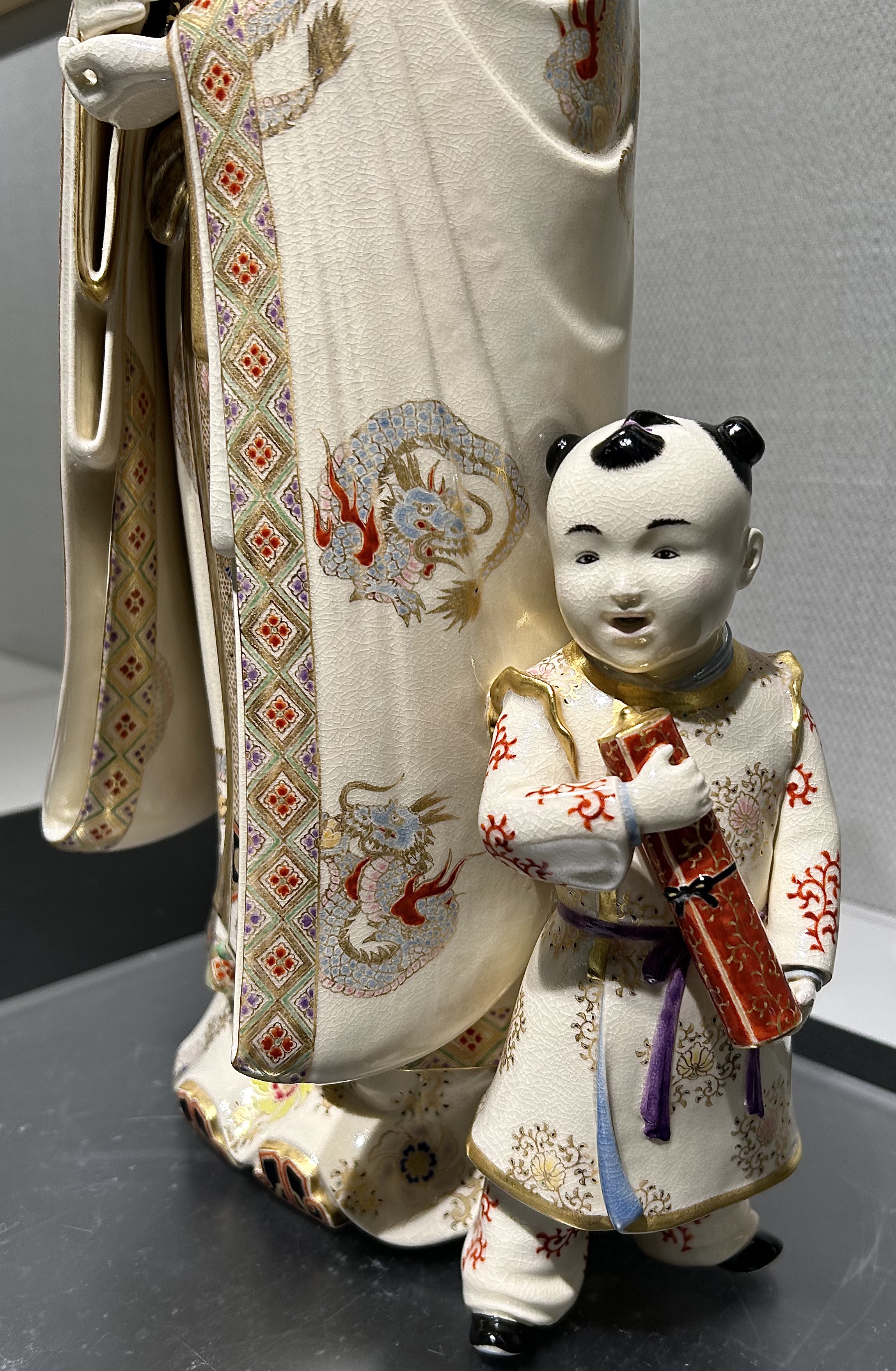
Satsuma Chin Jukan Exhibit
I had the pleasure and wonderful opportunity to visit the exhibit of the 15th generation Chin Jukan. He kindly took time to answer my questions and to tell me about his work. Some of the exhibit also included some of the 350 year history of the origin of Satsuma Yaki. Pieces include white Satsuma with exquisite decoration work, as well as black Satsuma.
 |
| 13th Chin Jukan |




 |
| Bottom is 12th Chin Jukan |


 |
| 15th Chin Jukan |

 |
| Chin Julian with his cat and mouse piece |


 |
| 14th Chin Jukan |


 |
| Kuro Satsuma |

Thursday, April 13, 2023
FUTAGAWA YAKI (二川焼)-Ceramics of Fukuoka Prefecture
The exact origins of Futagawa pottery are not fully known. The old Futagawa ware was somewhat similar to Shodai yaki. In Early Meiji period production was halted and then later re-started by a potter from Yumino, in Saga Prefecture. It shares the pine motif much like Takeo Yaki. It appears that Bernard Leach the famous British potter and close friend of Shoji Hamada spent some time working there.

Friday, March 31, 2023
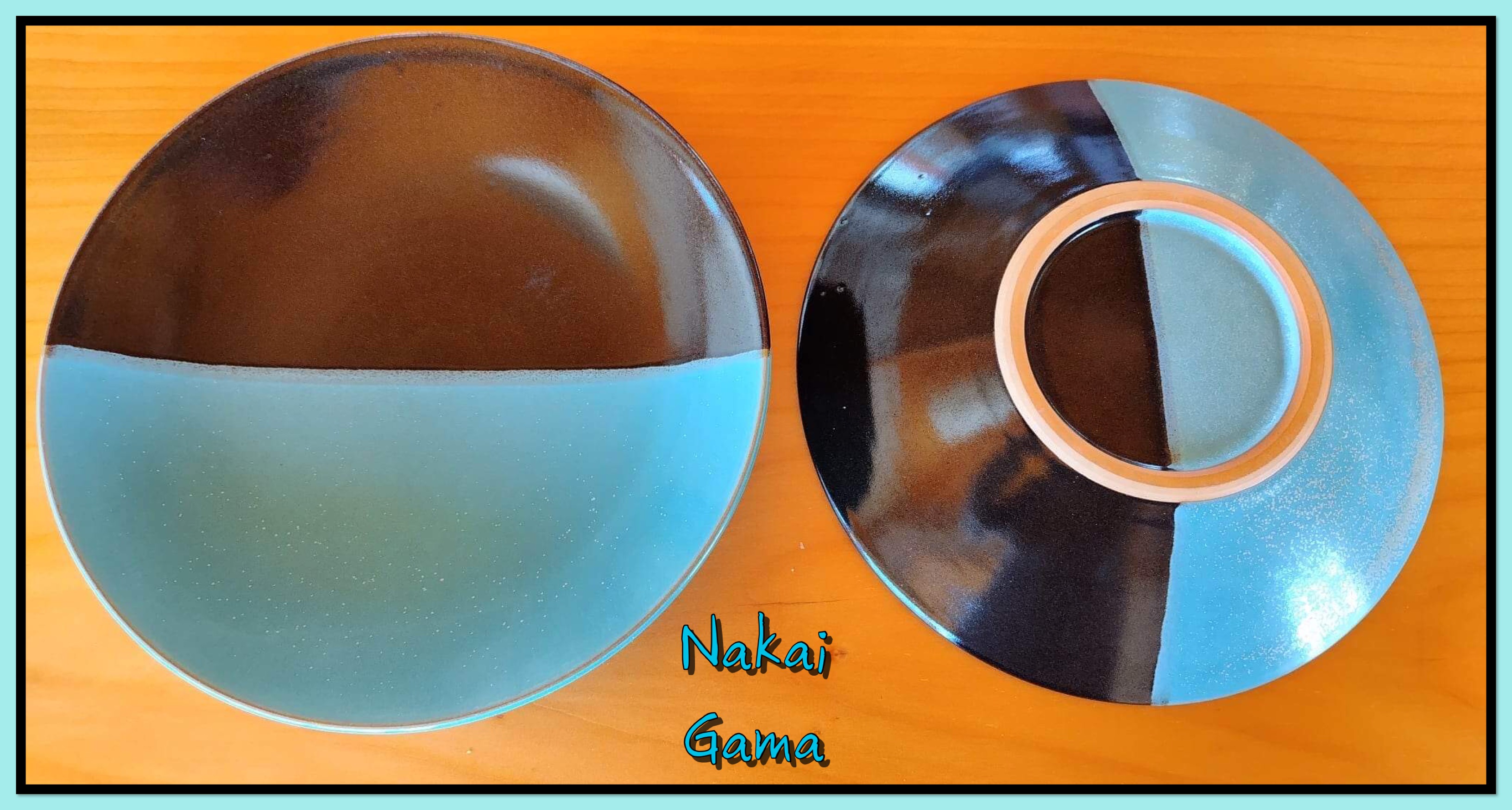
USHINOTO YAKI-Ceramics of Tottori Prefecture (牛ノ戸焼うしのとやき)
Made in Tottori city, Tottori Prefecture, Ushinoto ware is considered a folk pottery. Though it existed before the Folk “Mingei” movement, the kilns were highly influenced by the movement. Probably the most well known aspect of Ushinoto is the plate separated in two or three parts using bluish green and black or a bluish green, black and creamy white. They do make many other styles as well. Apparently the style originated back in the Edo period. When Dr. Yoshida Shoya showed the old designs to Yanagi Soetsu who gave his opinion on the best of the designs. It is now produced by two kilns, the Ushinoto kiln headed by Mr. Kobayashi and the Nankai Inshu kiln headed by Mr. Sakamoto. I’m very thankful for the help of Alice Gordenker for the pictures and information concerning this style.



Monday, March 20, 2023
Yūmachi Yaki 湯町焼-Ceramics of Shimane Prefecture
This type of ware is highly influenced by the Mingei Movement. The clay tends to be reddish and the glazes can be yellow, cream, brown and some blues. Leach style slip ware is common as is the influence of Mashiko potters like Hamada Shōji. There is some influence of the Koishiwara/Onta style of tobigana chattering in some. As with many Mingei potters the wares of the Yūmachi kiln go unmarked.
Subscribe to:
Posts (Atom)
-
 From 1921-1941, wares from Japan exported to the United States had to be marked "Japan" or "Made in Japan". During Wor...
 -
Kutani ware is from Ishikawa Prefecture. The markings are often in red, but can be impressed, in blue, gold and sometimes black with a g...
-
 There is a lot of confusion on the various marks used by the Fukagawa Seiji and Koransha companies over the years. When you check out the va...
